Here are some of the many reasons why you should definitely visit Kathmandu during Tihar/Diwali celebrations.
If you are visiting the Kathmandu Valley during Diwali known locally as Tihar, then get ready for a visual spectacle and a sensory immersion! Falling in the months of October-November, Tihar is Nepal’s second most important festival after Dashain. Like Diwali in India, Tihar is celebrated as the festival of light and is a vibrant, colourful affair.
Celebrated over five days, Tihar honours Yama, the god of death and the worship of Laxmi, the goddess of wealth and luck also dominates the celebrations. Not only Yama and Laxmi, but animals and birds like crows, cows, dogs, and ox have each their own day of being celebrated.
In November 2026, Poets And Pilgrims is exploring the Kathmandu Valley during Tihar and this article gives you some of the many reasons why it’s an experience worth having.
The Overall Atmosphere During Tihar
Temples, homes big and small, and public spaces are all lit with ‘diyos’ – oil lamps made of clay. Beautiful rangoli made using materials like coloured rice and sand, dry flour, and flower petals, is seen outside homes. Flower petals and garlands are used to enhance the overall decoration, ready to welcome the gods.
Throughout Tihar celebrations, temples and other buildings are decorated with small, flickering light bulbs called jhilimili. As you walk around, you notice the smell of ghee and incense in the air. In the evening streets filled with decorations and the beautiful orange-gold light from oil lamps is a visual delight.
Five Days of Tihar
Day 1: Kaag Tihar
The first day of Tihar is known as Kaag Tihar when crows, Yama’s messengers, are worshipped. Families prepare small portions of rice and sweets for the crows and place them on the roofs, walls, or the exterior of their houses before dawn. This is done to appease the crows, hoping they will not bring grief or death to their homes in the coming year.
Day 2: Kukur Tihar
Kukur Tihar is the second day when the special bond between humans and dogs, the agents of Yama, is celebrated. Walking around Kathmandu this day, you will notice dogs – whether pets or street dogs – with a tika on their forehead and a marigold garland. They are fed food specially made for them and their faithfulness, loyalty, and companionship is acknowledged.
Day 3: Gau Tihar and Laxmi Puja
The third day is Gau Tihar. Gau/gai means cow and it’s considered holy by Hindus. Cows receive a special prayer on this day along with flower garlands and tika on their foreheads. They are worshipped as symbols of prosperity, nourishment, and guidance in the spiritual journey.
The third day of Tihar is also celebrated as Laxmi Puja. In the evening, a special prayer is held for Laxmi – the goddess of wealth and good fortune. People clean their house and decorate it with diyos and rangoli to welcome the goddess in the house.
Day 4: Govardhan Puja / Mha Puja / Goru Tihar
Govardhan Puja honours Lord Krishna’s lifting of Mount Govardhan to protect villagers from the storm sent by Indra, the ‘king of the gods’.
The Newar people of the Kathmandu Valley observe Swanti, also known as Mha Puja, or self-worship. Family members sit in front of a colourful mandala and perform rituals to purify their soul and body. It is a ritual of exploring the inner self and glorifying the divine that exists within all people. It emphasises self respect and peace.
This day also honours the ox for their important role in Nepal’s agriculturally-dependent society. Oxen are decorated with tika and fed special meals as a token of appreciation for their hard labour in the fields.
Day 5: Bhai Tika
Bhai Tika is celebrated on the fifth day of Tihar. Sisters offer brothers tika and garlands, and bless them for a long life and protection. Brothers, in return, promise lifelong support to their sisters and give gifts or money.
Food During Tihar
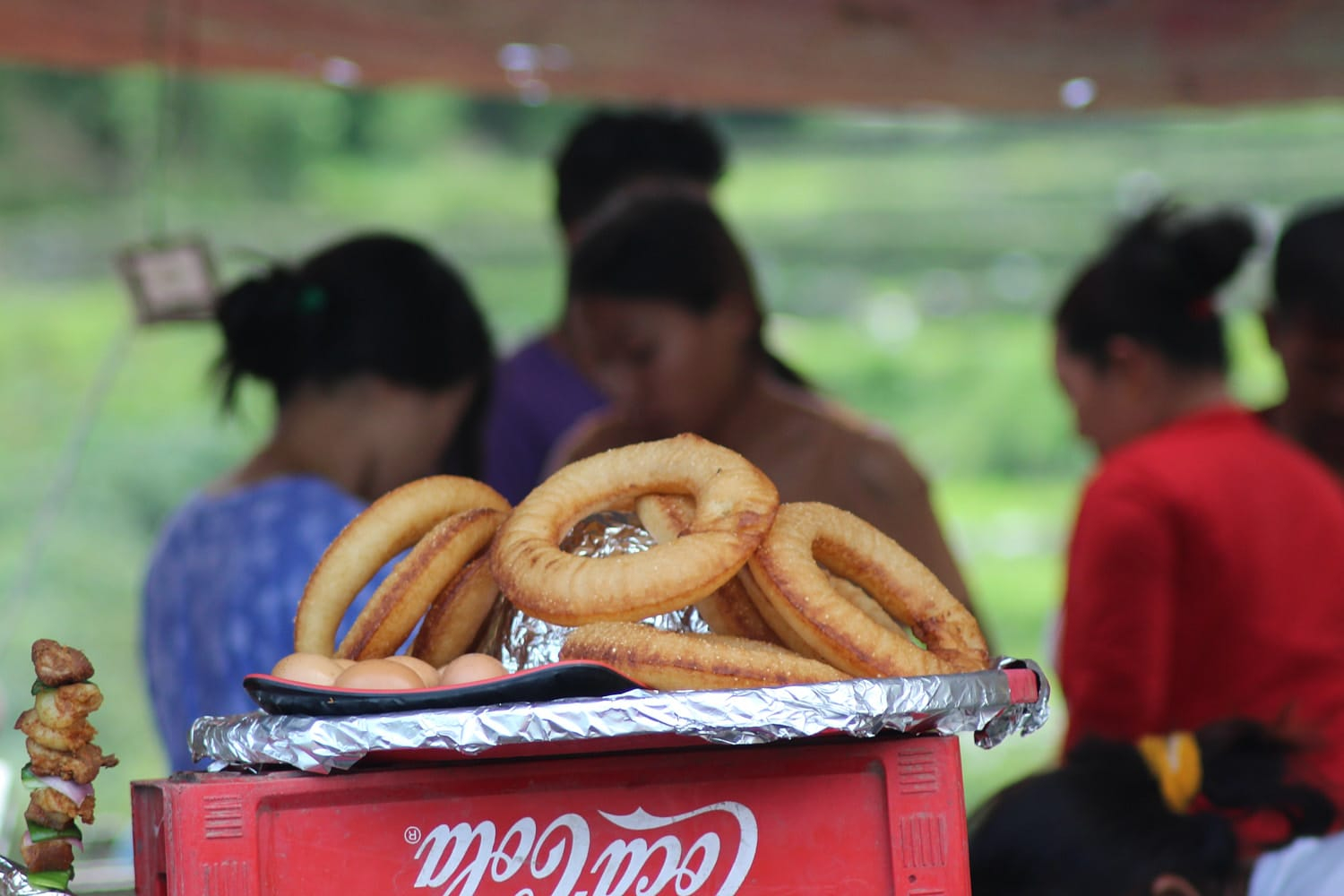
Sel Roti
The sensory experience of Tihar is defined by Sel Roti. This circular sweet bread has a soft, fluffy centre. It’s made from rice flour, sugar, and cardamom, deep-fried in ghee.
Sel roti appears on almost every household table during Tihar (and other celebrations). Making sel roti is often a communal activity where families get together to prepare it fresh throughout the festival season.
Yomari
Youmari is a steamed dumpling made with rice flour dough and filled with sweet ingredients like khoya or chaku along with coconut. It’s a popular item among Kathmandu Valley’s Newar communities during Tihar and other festivals.
Sweets
Tihar brings an abundance of traditional Nepali sweets. Some popular treats include:
- Anarsa: A biscuit made with rice flour, ghee, sugar, milk and coated with sesame seeds
- Lalmohan: Also known as gulab jamun. A syrupy dessert made from milk solids, deep fried, and drizzled with sugar syrup
- Chimti: A type of fried bread shaped like a flower. Typically given to brothers by sisters on Bhai Tika
- Khir: A rich rice pudding made with condensed milk
- Peda: Dense, melt-in-the-mouth milk fudge
- Barfi: Layered sweet blocks often flavoured with nuts
Dal Bhat
The staple Nepali meal of lentils and rice enjoyed throughout the year is as popular during Tihar. Daal bhat is served with tarkari (seasonal vegetable curry) and pickles. Extras like saag (leafy greens like spinach), meat gravy (usually chicken or mutton), and yoghurt are often part of daal bhat thali.
We believe local cuisine is one of the best ways to make a connection with the place you are visiting. So beside trying some of the Tihar special items mentioned above, we will continue to explore Kathmandu through other food. Here’s what we usually eat during our trips to Nepal.
Weather Around Kathmandu Valley During Tihar
The time of Tihar also coincides with one of the best times to visit Nepal. With the monsoon over, the weather starts getting more pleasant. Days are bright and sunny with clear sky while evenings carry a pleasant chill in the air.
Before it starts getting very cold as the month of December approaches, the weather during Tihar is definitely one of the many reasons to visit Kathmandu.
Sounds Convincing? Join Us in November!
These are some of reasons I could think of to convince you to visit Kathmandu Valley during Tihar. Checkout Whispers of the Valley – Diwali edition and join us this November!
Like all Poets And Pilgrims trips, this is going to be an immersive slow-travel experience with a small group. No rushing between places, no rigid plans, and the focus as usual on truly experiencing what Nepal has to offer.